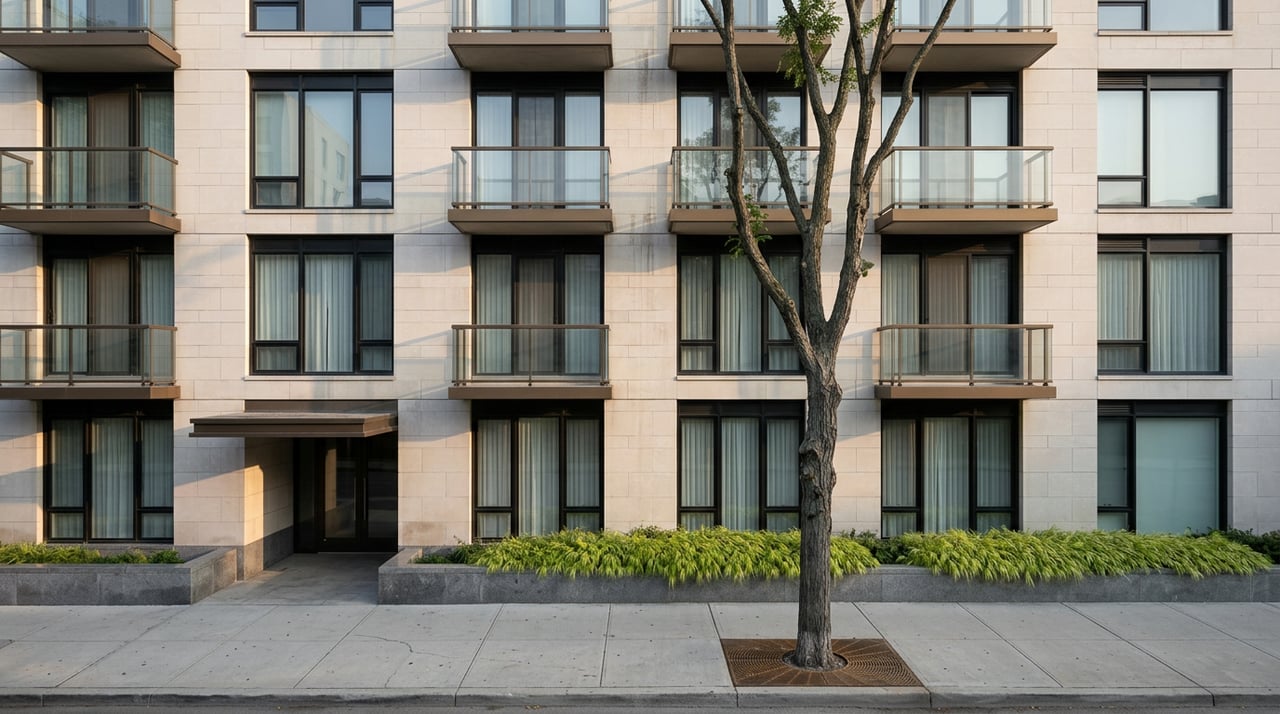
Walk up to 136-21 Roosevelt Avenue this month and the awning tells you nothing you can trust. For years this address meant Landmark Quest Mall, the no-frills food court where the best stalls had the longest lines and half the signage was in Chinese only. If you lived in Flushing, you probably had an order memorized here. If you're checking for it now, it's gone. The space reopened this summer as Ever Prosper Food Court, an entirely different operation with its own twelve stalls and none of the old names on them.
This is not a story about one mall closing. It is the pattern underneath almost every food hall on this stretch of Roosevelt Avenue, and once you see it, you stop being surprised when a familiar storefront turns into something else overnight. In downtown Flushing, the building rarely disappears. The tenant does, sometimes to a new address a few blocks over, sometimes to nowhere anyone can find.
The Address Stayed. Everything Behind It Changed.
Ever Prosper Food Court didn't renovate Landmark Quest Mall. It replaced it, vendor by vendor. The twelve stalls now operating at that Roosevelt Avenue address include a crayfish specialist, a poke counter, a lanzhou beef noodle stand, and one stall going by the name Fresh Fish Village. None of these were part of the old lineup. If you walk in expecting the rice-roll counter or the shaobing stand you remember, you'll find a completely different set of operators running the same square footage.
That's worth sitting with for a second. A food court closing usually reads as a loss. Here it reads more like a lease turning over. The physical hall survived. The roster inside it did not.
Where the Vendors You Actually Miss Went
The more useful question isn't what replaced Landmark Quest Mall. It's what happened to the vendors who used to be there, because at least one of them is still serving the exact same food, just under a different roof.
Joe's Steam Rice Roll, the stall regulars traveled across the neighborhood for, didn't close when Landmark Quest Mall did. It relocated into the basement food court at New World Mall, a few blocks away, where it now operates near Tarim Uyghur Food and the restrooms. If you've been wondering why your usual rice-roll order suddenly wasn't where you left it, that's the answer. The dish didn't disappear. The address did.
Not every vendor gets that kind of continuity. Yukun Shaobing, another Landmark Quest Mall stall known for its stuffed flatbread, has not resurfaced at any of the other Flushing food halls as far as anyone tracking the neighborhood's food scene has reported. Some closures are relocations. Others are just closures, and there's no way to tell which one you're looking at until you go check.
This is the actual mechanism worth understanding if you eat here regularly: Flushing's food identity is more portable than its real estate. A stall's survival depends on whether the operator can find a new home in one of the other halls, not on whether the building they started in stays open.
The Halls You're Actually Choosing Between
Once you widen the view past one closed mall, the picture gets clearer. Downtown Flushing runs on a small cluster of large indoor food halls, all within a short walk of each other, each with its own personality and its own churn rate.
| Food Hall | Location | What Sets It Apart |
|---|---|---|
| New World Mall Food Court | 136-20 Roosevelt Ave (basement) | Over 30 stalls spanning Malaysian, Thai, Vietnamese, Chinese, Korean, and Japanese food, plus refugee vendors from other closed malls, including the relocated Joe's Steam Rice Roll |
| Golden Mall | 41-28 Main St | The older-school version of a Flushing food hall, still known for hand-pulled noodle stalls and a no-frills counter culture |
| Tangram Food Hall | Mixed-use development, downtown Flushing | A 24,000-square-foot hall with a more polished, neon-lit format built around Instagram-friendly vendors |
| The Food Hall at Queens Crossing | 136-17 39th Ave | About 10,000 square feet and nine concepts, generally considered the more Western-friendly option among the group |
| Ever Prosper Food Court | 136-20 Roosevelt Ave | The newest entrant, occupying the former Landmark Quest Mall space with an entirely new twelve-stall lineup |
Five halls, all within a few minutes of each other on foot, none of them static. If you've settled into a routine of visiting just one, you're seeing a fraction of what's actually here, and you're more likely to be caught off guard the next time a lease changes hands.
The New Openings Skipping the Mall Format Entirely
While the food halls keep reshuffling internally, a separate wave of standalone openings has been landing in Flushing without going through a mall at all, which tells you the neighborhood's appetite for new food is bigger than any single building can hold.
Nong Geng Ji opened its first U.S. location on 37th Avenue in January, bringing a Hunan restaurant group that already runs more than 100 locations across China, Southeast Asia, and Canada. The brand's founder, Guohua Feng, built his reputation on countryside-style Hunan cooking, and Flushing became the first place in the country to get it as a sit-down restaurant rather than a mall stall.
Mixue landed on Kissena Boulevard this past July. It's a Chinese soft-serve and bubble tea chain that has quietly become one of the largest food and beverage operators in the world by store count, and its Flushing location drew immediate attention for prices that undercut nearly everything else on the block.
Man Fire Yakitori, on Prince Street, has carved out a different niche entirely. Diners pick their own skewers, including options like duck tongue and flounder head, and watch them grilled over charcoal. The kitchen stays open until 2 a.m., which puts it in a category almost none of the food halls can compete with. When the malls close for the night, Prince Street is still going.
None of these three needed a food court to open in. That's the tell that Flushing's food growth isn't just about who wins the next mall lease. It's happening on the street level too, in formats the halls were never built to hold.
What This Actually Means If You Live Here
If you've been away from Roosevelt Avenue for a few months, the version of Flushing's food scene you remember is already partly wrong. Not because anything got worse. Because the buildings kept their addresses and swapped their tenants, and there's no posted notice that tells you which stall moved where.
The practical habit worth building is simple. When a favorite stall's storefront looks different, don't assume it closed. Check the other halls first, starting with New World Mall, since that's where displaced Landmark Quest Mall vendors already landed once. If you can't find it after that, it's more likely gone the way Yukun Shaobing did, without a forwarding address.
The other habit is just showing up more often. A neighborhood that reshuffles its food halls this fast rewards people who treat it as a rotating menu rather than a fixed map. What's true this September about Ever Prosper Food Court's lineup may not be true by spring.
This kind of constant turnover is one of the things that makes Flushing a place people want to stay in for years, not just visit. If you're weighing a move here, or you already call it home and you're thinking about what comes next, Elaine Tian has spent her career inside these blocks and can talk through what a Flushing address actually gets you, food halls included. Schedule a free consultation whenever you're ready to talk specifics.