Thinking about a move to Flushing, Queens, but not sure what daily life actually feels like? You want a neighborhood with great food, easy transit, and real community. This guide shows you what to expect, from housing types and commutes to parks and everyday errands, with practical tips for buyers, renters, and investors. Let’s dive in.
What Flushing feels like day to day
Flushing is one of Queens’ busiest commercial and cultural centers, centered around the Flushing–Main Street transit hub. You’ll see multilingual storefronts, busy sidewalks, and a wide range of restaurants and food courts packed at lunch and dinner. Just a few blocks from the core, the pace shifts to quieter residential streets with garden apartments, rowhouses, and mid-rise buildings.
Community life is active. Seasonal festivals, including Lunar New Year celebrations, bring people out to Main Street. Major cultural institutions near Flushing Meadows–Corona Park add weekend options, including museums and the USTA Billie Jean King National Tennis Center.
Housing options by block
You can find almost every housing type in Flushing, from high-rise condos to garden co-ops and single- or two-family homes. The right fit depends on your budget, commute, and how close you want to be to the busiest streets.
Downtown high-rise living
Near Flushing–Main Street and along Northern Boulevard and Kissena Boulevard, you’ll see newer mid- and high-rise buildings. Many offer elevator access and modern finishes, and some include doorman services and on-site amenities. If you value walkability, restaurants, and quick transit, this pocket delivers. Expect more street noise and heavier foot traffic, especially at peak hours.
Garden co-ops and mid-rise buildings
Mid-century garden apartment complexes and long-standing co-ops are common throughout the neighborhood. They often come with larger floor plans and more green space between buildings. Monthly costs can be lower than amenity-rich towers, though finishes and building services vary.
Rowhouses and one- to two-family homes
Move away from the busiest corridors and you’ll find older residential blocks with rowhouses and one- to two-family properties. These areas feel more residential and can be a fit if you want more privacy, outdoor space, or multi-generational living. Inventory changes block by block, so it helps to tour several streets.
Choosing your pocket
- Downtown Flushing: Best for walkability, shopping, restaurants, and rapid transit access.
- Kissena and the Kissena Corridor: Mid-rises and a quieter feel with proximity to Kissena Park.
- Murray Hill and Queensboro Hill edges: A mix that includes more single-family-style blocks.
- Willets Point and the waterfront edge: Subject to long-term redevelopment. Check city updates before assuming timelines.
Practical housing tips
- Visit at different times to gauge street noise, especially near Main Street or Roosevelt Avenue.
- Newer high-rises offer more amenities. Older walk-ups can mean lower monthly costs.
- Parking is limited in the core. Many buildings do not include a spot. Budget for a garage or private lot if you need a car.
Getting around and commute times
Transit is one of Flushing’s strengths, with heavy subway and bus coverage centered on Flushing–Main Street. Your best option depends on where you work.
7 train to Midtown
The 7 train is the most direct rail option into Manhattan, serving the Grand Central area and Midtown. Typical travel time from Flushing–Main Street ranges about 30 to 45 minutes, depending on the time of day and service. For West Side or Downtown jobs, plan on transfers.
Buses and express options
Roosevelt Avenue and Broadway have a dense bus network that connects Flushing with Jackson Heights, Elmhurst, and northern Queens. There are express and limited routes that can be helpful for certain Midtown destinations. Express buses cost more but offer comfortable seating and fewer transfers.
Driving and parking
Driving to Manhattan varies with bridge or tunnel congestion, so timing matters. Intra-Queens driving is doable, but expect rush-hour traffic. Street parking in the downtown core is tight and often metered, so many residents choose garages or go car-free.
Biking and micromobility
Bike lanes exist in select corridors, and greenways connect to nearby parks. Coverage is patchy, so map your route before relying on biking for your commute.
Parks and weekend recreation
Flushing offers strong outdoor options, including one of New York City’s flagship parks.
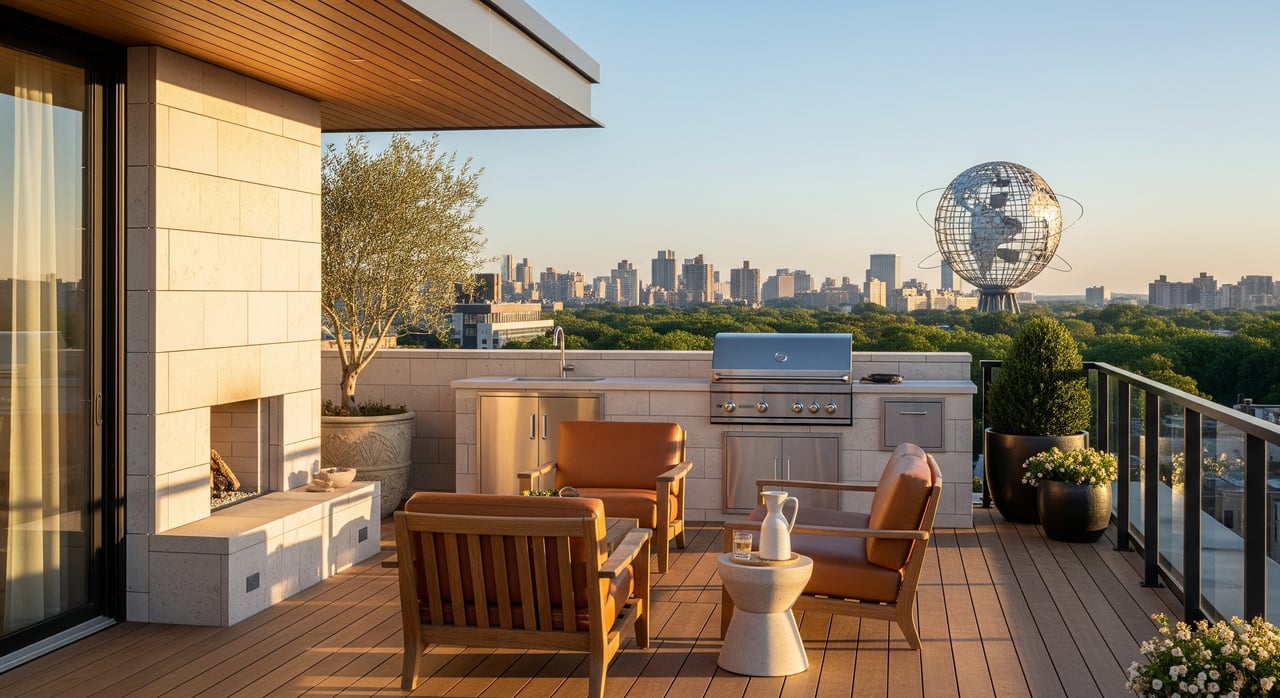
- Flushing Meadows–Corona Park: Home to the Unisphere, the Queens Museum, the New York Hall of Science, the Queens Botanical Garden, and major sports fields and lakes. It hosts year-round events, including the US Open at the USTA Billie Jean King National Tennis Center.
- Kissena Park and Kissena Corridor Park: Local favorites with walking paths, sports fields, and Kissena Lake. Great for jogs, family time, and short nature breaks.
- Bowne Park and pocket parks: Smaller green spaces scattered throughout residential blocks.
Food, shopping, and daily errands
Flushing is a destination for regional Asian cuisines, from Taiwanese and Sichuan to Korean, Japanese, and Southeast Asian. You’ll find family-run restaurants, food courts with many stalls, and late-night options. It is common to sample a new spot each week without repeating.
For shopping, downtown Flushing is packed with supermarkets, specialty grocers, pharmacies, banks, electronics shops, and indoor shopping centers. Many day-to-day needs are within a short walk if you live near the core. Northern Boulevard and Main Street are lined with strip malls and retail centers that mix chain and local stores.
Schools, healthcare, and everyday services
Public schools are operated by the NYC Department of Education, with zoned schools that vary by address. You can also find private and parochial options. Because details change by block, confirm your zoned schools and program offerings through official school directories and zone maps.
You’ll see a dense cluster of medical offices, specialists, and outpatient clinics along Main Street. Larger hospitals and medical centers across Queens are reachable within a short drive or transit ride. For safety, many residents check NYPD precinct statistics and local crime maps to understand current trends.
Cost of living and value
Compared with many Manhattan neighborhoods, Flushing can offer strong value per square foot, especially for larger units or multi-bedroom apartments. Newer luxury buildings near the transit core raise prices in some pockets. Rents and sale prices vary widely by building age, unit size, and distance to Main Street. For up-to-date pricing, you’ll want current, block-level data.
Who thrives in which pocket
- If you want restaurants, shopping, and the fastest transit: Downtown blocks near Main Street and Roosevelt Avenue fit well.
- If you prefer a quieter setting with park access: Areas around Kissena Park and along the Kissena Corridor offer a balanced feel.
- If you want a home with more space or multi-generational potential: Explore one- to two-family blocks on the edges of the core.
- If you’re investing: Study multi-family opportunities near stable retail corridors and transit. Verify any redevelopment assumptions with city planning updates.
Tips for your first tours
- Time your visits. Go on a weekday morning and an evening to feel commute patterns and evening activity.
- Test your commute. Ride the 7 train to your work area and note transfer points and travel time ranges.
- Check street noise and building soundproofing. Bring a simple checklist and step onto the sidewalk at midday and late evening.
- Confirm parking options. Ask about on-site spots, nearby garages, and monthly costs if you plan to keep a car.
- Walk to essentials. Tour the nearest supermarket, pharmacy, and bus stops to test daily convenience.
- Verify school zoning. Use official DOE maps to check the zone for your exact address.
- Look for green space. Visit Kissena Park or Flushing Meadows–Corona Park to see if the vibe fits your routine.
Working with a local guide
A move to Flushing is easier when you have a neighborhood specialist who knows the buildings, the transit trade-offs, and the block-by-block differences. With 100-plus closed transactions and multilingual outreach, including Chinese-language support, you get clear answers fast and a process built around your goals. Whether you’re buying, selling, renting, or investing, you deserve responsive guidance and real market insight. To map your next steps, connect with Elaine Tian for local advice and to schedule a free consultation.
FAQs
How long is the 7 train commute from Flushing to Midtown?
- Typical travel time from Flushing–Main Street to the Grand Central area is about 30 to 45 minutes, depending on time of day and service patterns.
What is parking like in downtown Flushing?
- Street parking is limited and often metered or restricted, and many buildings do not include a spot, so budget for a garage or consider going car-free.
Are there parks and green spaces near Flushing?
- Yes, Flushing Meadows–Corona Park is nearby with major attractions, and Kissena Park, Kissena Corridor Park, and Bowne Park serve local recreation needs.
What kinds of housing are common in Flushing?
- You’ll find high-rise condos and rentals near the core, mid-century garden co-ops, and older rowhouses plus one- to two-family homes in quieter pockets.
How multilingual is daily life in Flushing?
- Many services and storefronts operate in multiple languages, with Chinese dialects and Korean commonly used alongside English, especially around Main Street.
How can I check school options for my address in Flushing?
- Use the NYC Department of Education’s official directories and school zone maps to confirm zoned schools and program offerings for your exact location.
Where can I find information about safety in Flushing?
- Review NYPD precinct statistics and local crime maps for current data, and compare commercial corridors with nearby residential blocks for context.
Are there express buses from Flushing to Manhattan?
- Yes, express and limited bus routes operate from Flushing to parts of Manhattan, offering a pricier but comfortable option with fewer transfers for some riders.