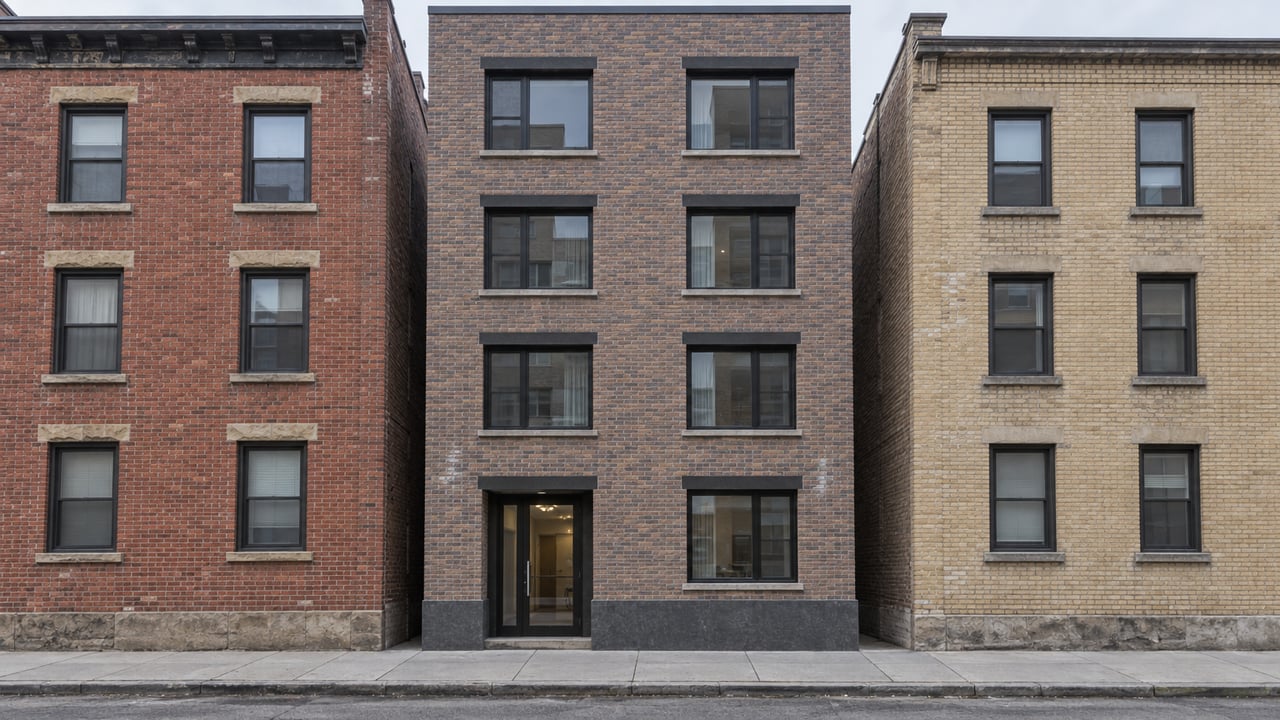
A vacant lot on 88th Street, a block from the Elmhurst Avenue subway station, doesn't attract much attention. There's a chain-link fence, a Department of Buildings placard bolted to a post, and permit paperwork filed back in March 2026 for a four-story building with 14 apartments. No community board hearing. No City Council vote. No protest signs. The owner filed plans, an architect signed off, and the lot will become housing because the zoning already allows it.
A short drive away, at the corner of Queens Boulevard where a TD Bank branch has sat across from the Pan American hotel for years, a very different process played out. Getting permission to build 314 apartments there took a proposal, a community board vote, and a City Council review before anyone could pour a foundation.
If you're comparing Elmhurst to other Queens neighborhoods and you've only followed the headline fight over that Queens Boulevard tower, you've been watching the slower story. The faster one is happening lot by lot, with no vote required.
The Fight Everyone Saw
The proposal at 78-01 Queens Boulevard asked the city to rezone a site occupied by a TD Bank and its parking lot so a developer, Apex Development Group, could build a 13-story tower with 314 units, 79 of them permanently affordable. Queens Community Board 4 voted against it 30-2 in June 2025, with members raising concerns about a neighborhood where most buildings run two or three stories and about development on a site inside a historically industrial, potentially contaminated stretch of the boulevard.
The pushback wasn't quiet. A group of residents held a demonstration at the site; QNS reported that signs read:
"Elmhurst is not for sale"
Council Member Shekar Krishnan, who represents the district, ultimately backed the project after negotiating changes: the affordability requirement moved to 55% of area median income, down from 60%, and the developer agreed to include a 15,000-square-foot community center, a public swimming pool, and a labor agreement with 32BJ SEIU covering building service jobs. The City Council approved the rezoning 42-2 in November 2025, with Council Members Robert Holden and Frank Morano voting no and David Carr abstaining.
Five months passed between the community board's vote and the Council's final decision, and that's before any construction timeline gets set. It's the kind of project that generates coverage precisely because it's rare: a site that needed the city's full land-use review process before a single unit could be built.
The Buildings Nobody Voted On
While that fight played out in public hearings, at least four other residential buildings moved through Elmhurst's pipeline without needing anyone's approval beyond a standard permit review, because the zoning on those lots already allows buildings this size.
- 46-03 88th Street: a vacant lot near the Elmhurst Avenue M/R station, permits filed March 2026 for a four-story, 14-unit building with an average unit size of 837 square feet, most likely rentals.
- 41-62 74th Street: permits filed July 2026 to replace a one-story house built in 1955 with a four-story, six-unit building.
- 83-07 Queens Boulevard: a seven-story mixed-use building already completed, with 53 rental units, commercial space, and 27 enclosed parking spots.
- 83-12 Broadway: a seven-story mixed-use building nearing completion on an interior lot, with permits originally filed in 2024.
None of these needed a community board vote. None needed a City Council hearing. The developers filed plans that fit within existing zoning, and the Department of Buildings processed them the same way it processes a kitchen renovation or a roof replacement, just with more paperwork.
That's the part a portal search won't show you. The 314-unit tower is the project people know about because it required public permission. The 14-unit building, the 6-unit building, and the two completed 7-story buildings are the projects that didn't, and there's nothing stopping the same thing from happening on the next single-story lot, or the one after that.
Why the Zoning Difference Matters More Than the Headline
The Queens Boulevard site needed a rezoning because the site's existing zoning didn't support a 13-story building. That's precisely why it took public review: any developer wanting to exceed what current zoning allows has to ask the city to change the rules first, and that process invites scrutiny.
The other four sites didn't need that step because the density they're building was already permitted. A four-story walk-up or a seven-story elevator building on those lots isn't a change to the rules. It's the rules being used as written.
For someone evaluating Elmhurst against another Queens neighborhood, this distinction changes what you're actually assessing. A rezoning fight is visible. You can track the community board's calendar, read the City Council's vote record, and form an opinion before ground is broken. An as-of-right teardown is not visible in the same way. The only public signal is a permit filing, and those get logged individually rather than announced.
If you're looking at a single-family home on an Elmhurst block, the more relevant question isn't whether the next 78-01-style tower gets approved somewhere on Queens Boulevard. It's whether the zoning under your prospective block already allows a small multifamily building next door, because if it does, that transition doesn't require anyone's vote and won't come with the kind of advance warning a rezoning fight provides.
What This Looks Like From the Buyer's Side
None of this means Elmhurst is becoming a different neighborhood overnight. A 14-unit building on a formerly vacant lot and a 6-unit building replacing a single-story house are incremental. But they're also cumulative, and they're happening at a pace the entitlement process for a project like 78-01 Queens Boulevard simply can't match, since that process is built around public input by design.
If you're comparing a block in Elmhurst to a similar block in another Queens neighborhood, the practical step is to look past the median price and check what the zoning already permits on adjacent lots, not just what's currently built there. A one-story house next to a vacant or underbuilt lot on a block zoned for multifamily use is a very different long-term hold than the same house on a block where the zoning caps out at two or three stories. Neither is better or worse. They're different bets, and the zoning, not the headline fight, is what tells you which bet you're making.
For buyers weighing a starter condo against a single-family house in this part of Queens, or for investors looking at Elmhurst alongside other neighborhoods for a small multifamily acquisition, that zoning baseline is worth understanding before you tour a block, not after an unfamiliar building shows up next door.
If you're trying to figure out what the zoning on a specific Elmhurst block actually permits, or how a property you're considering compares to what's being built or filed nearby, Elaine Tian works this market daily across Queens, Manhattan, and Nassau County and can walk through what a given lot supports before you make an offer. Schedule a free consultation to talk through what a specific address or block actually allows.
This article is general information, not legal, tax or financial advice. Consult a qualified professional about your situation.